ABCs of Behavioral Biases (A-F)
Explore how anchoring, blind spot, confirmation, and familiarity biases can influence investment decisions.
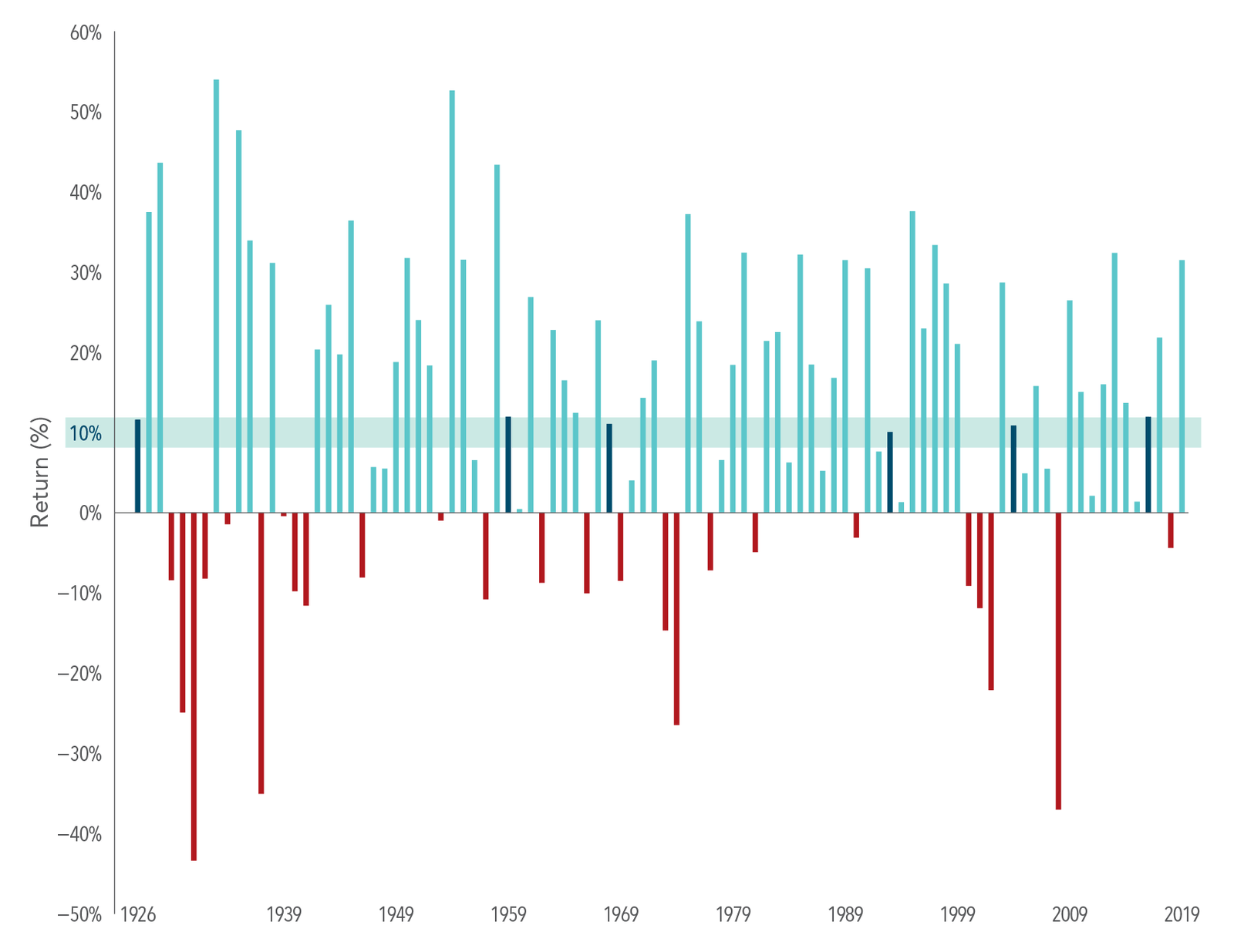
S&P 500 Index – Annual Returns (1926-2019)
Since 1926, the US stock market has rewarded investors with an average annual return of about 10%. But it is important to remember that returns in any given year may be sky-high, extremely poor, or somewhere in between.
Understanding the range of potential outcomes can help you stick with a plan and ride out the inevitable ups and downs.
This post was prepared and first distributed by Dimensional Fund Advisors.
Shore Point Advisors is registered as an investment adviser with the State of New Jersey. Shore Point Advisors only transacts business in states where it is properly registered, or is excluded or exempted from registration requirements. Past performance is not indicative of future returns. All investment strategies have the potential for profit or loss. There are no assurances that an investor’s portfolio will match or outperform any particular benchmark. Content was prepared by a third-party provider. All information is based on sources deemed reliable, but no warranty or guarantee is made as to its accuracy or completeness. All expressions of opinion reflect the judgment of the authors on the date of publication and are subject to change.

Explore how anchoring, blind spot, confirmation, and familiarity biases can influence investment decisions.

Behavioral biases can quietly influence investment decisions. Learn how recognizing them may help you stay disciplined and focused on your financial plan.

A strong financial plan starts with clear goals to guide your investment strategy, risk decisions, and long-term planning.

Benjamin Franklin’s timeless money lessons offer practical reminders about budgeting, disciplined investing, and financial freedom.